Find the savings hiding in your shipping data
Turn your shipping data into savings you can actually use.

Customers like Gerber ship thousands of containers a year and still cut total logistics costs by 10%, with less than 1% of cargo rolled. Our AI and technology can optimize your containers, routes, and modes, so you spend less without reducing performance.
The quoted rate is just the start. Demurrage, detention, and emergency re-routing charges pile up fast once your cargo's in transit, and by the time the invoice lands, the real cost looks nothing like the quote.
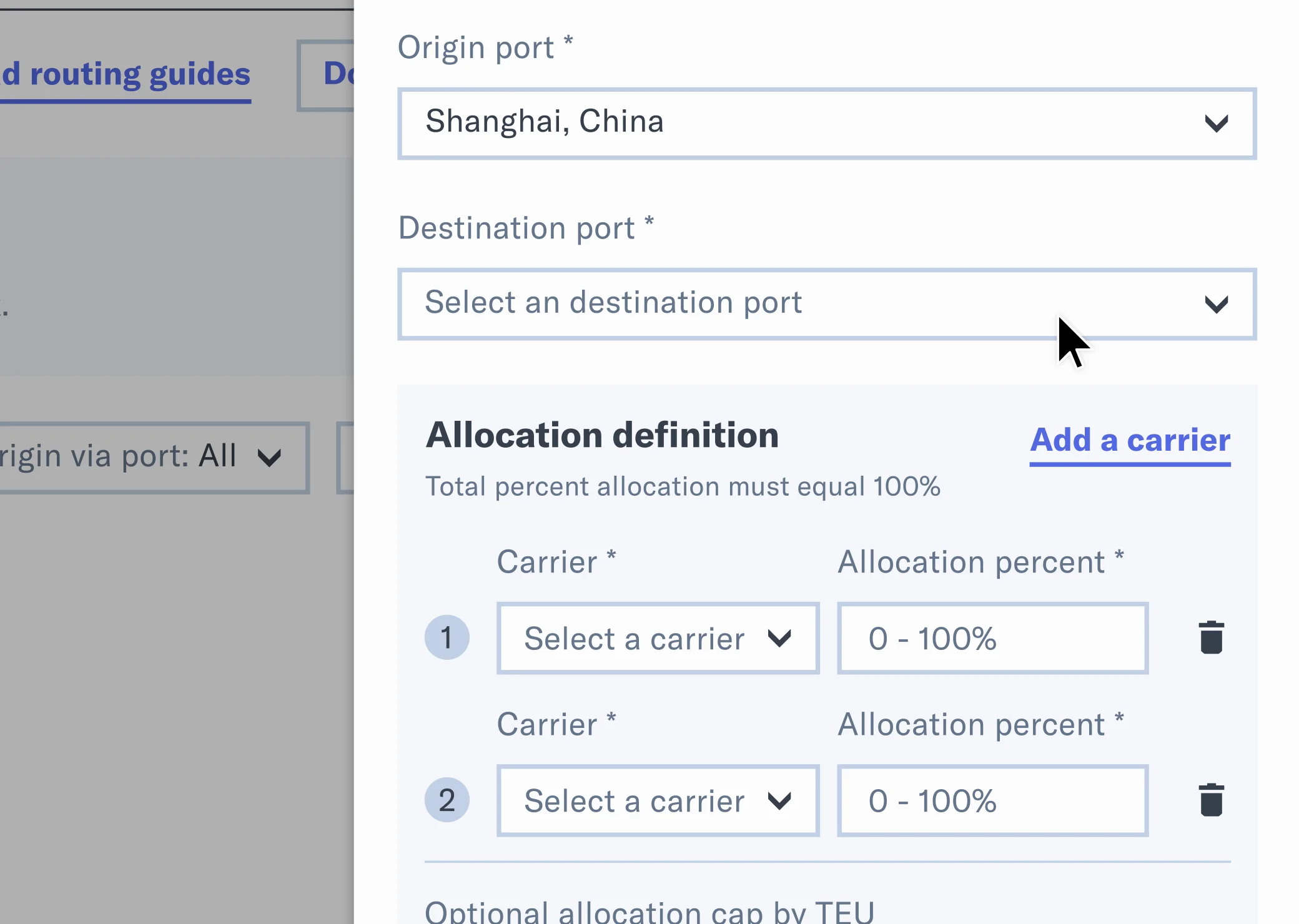
Blank sailings, port strikes, and canceled strings hit every ocean shipper eventually. When you're locked into a single carrier, you just wait it out. Flexport spreads your freight across every major alliance, so a disruption on one string doesn't have to delay your cargo.
Freight charges, duties, and accessorial fees get split across systems and forwarders. By the time the invoice lands, it's tough to know what you actually paid to get your product to the door.
Couldn't load video
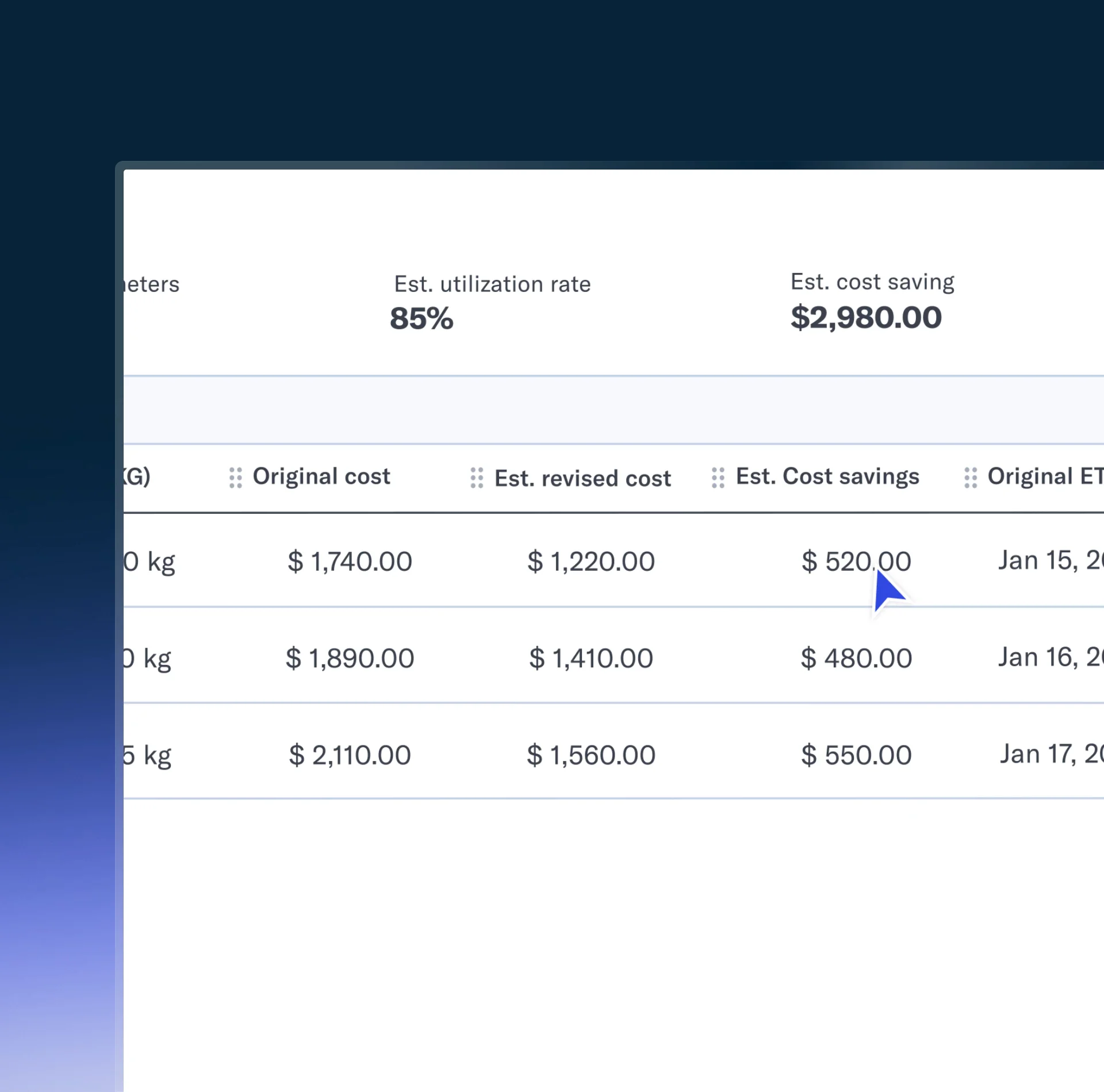
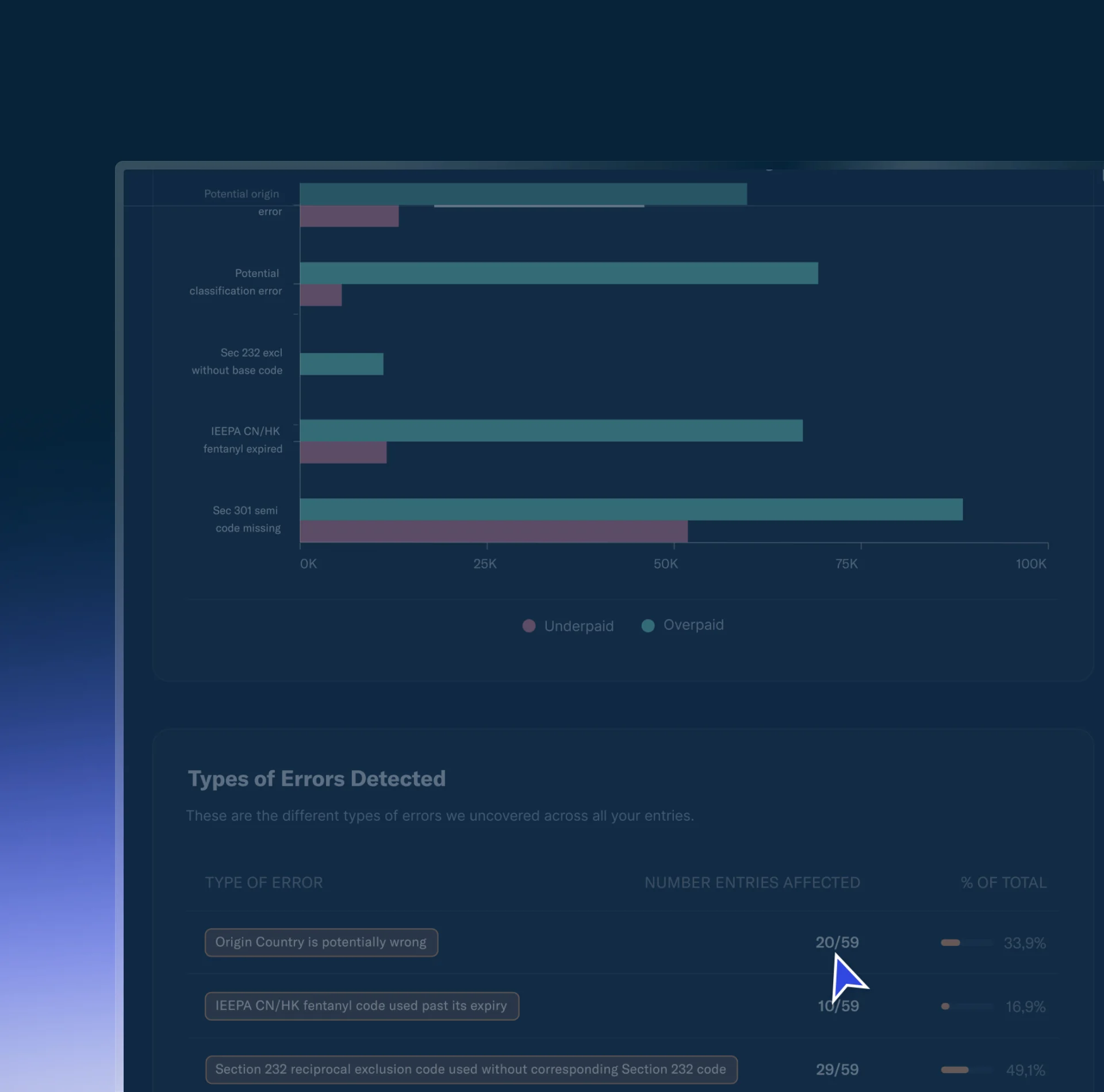
Supply Chain Optimization evaluates every ocean booking on a weekly cycle against live pricing and returns the mathematically optimal container plan.
Couldn't load video
Couldn't load video

Couldn't load video

Small changes in how you ship compound fast.
10%: Average freight savings with AI container optimization
35%: Reduction in freight spend when clients use Flexport's Control Tower.
20%: Savings with Buyer's Consolidation on end-to-end logistics spend, compared to LCL.










Start by looking past the quoted rate. Demurrage, detention, and emergency re-routing fees are usually what push your total spend over budget, not the base rate itself. Flexport customers save an average of 10% on total logistics costs through better planning, multi-carrier access, and proactive cost management, not just a lower quote.
The headline rate is rarely the full story. Demurrage and detention charges, blank-sailing replanning costs, and emergency premium bookings add up fast once your cargo's in transit. Flexport tracks free day windows and coordinates port pickups automatically, cutting demurrage and detention charges by an average of 25%.
Yes. Ocean freight is the lowest-cost mode for moving goods internationally, especially at volume. The tradeoff is transit time, but with predictable planning and real-time visibility, most shippers can move time-flexible cargo by ocean without disrupting their supply chain.
It depends on your volume. FCL (Full Container Load) makes sense once your cargo fills roughly 70% or more of a container. Below that, LCL (Less Than Container Load) means you only pay for the space you use, since Flexport consolidates your shipment with others heading the same direction. Neither is inherently cheaper. The right one is whichever matches your actual volume.
It does, mainly by avoiding the alternative: getting stuck with no options when a single carrier blanks a sailing or hits a service disruption. Flexport spreads bookings across every major alliance and automatically rebooks to the same departure week, so you're not paying for emergency re-routing or absorbing a week of delay costs.
Customers using Flexport's Control Tower see up to a 35% reduction in freight spend, and pairing ocean freight with Buyer's Consolidation can save up to 20% on end-to-end logistics costs compared to LCL alone. Both work by giving you visibility and control over the full shipment lifecycle, not just the ocean leg.