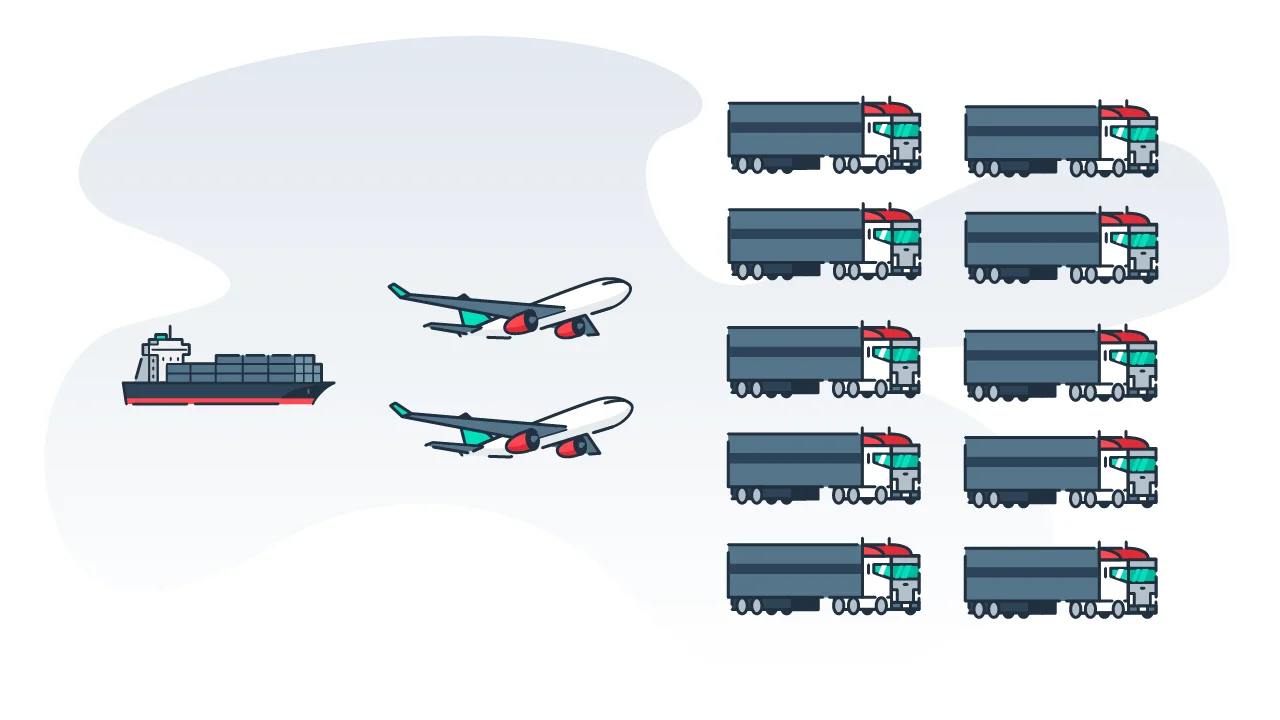
YURIY KUKUY: The term trucking encompasses many subcategories of over the road transportation, including but not limited to--
full container load or drayage in the USA, less than truckload, full truckload, and parcel. Often, intermodal transport via rail and barge are also considered to be subcategories of trucking. As they still involve trucking carriers managing the first and final mile.
Let's dive into each of those categories.
Let's start with full container load commonly known as FCL, or for those in North America--
drayage.
As the name suggests, it is the transportation of an entire container full of cargo. This is most often to or from an ocean port or rail terminal.
Containers are transported by tractor units with trailers called chassis. Chassis are designed to match the size of the container so they come in 20 foot, 40 foot, 45 foot, and 53 foot lengths. Commonly they have two axles, but three, four, or more axles are used for extra heavy haulage.
Containers generally unload from the rear so you need dock doors high enough to unload easily. Less common trailers called swing lifts enable the container to be placed on the ground. And tippers allow resin and other bulk materials to be tipped out of the container.
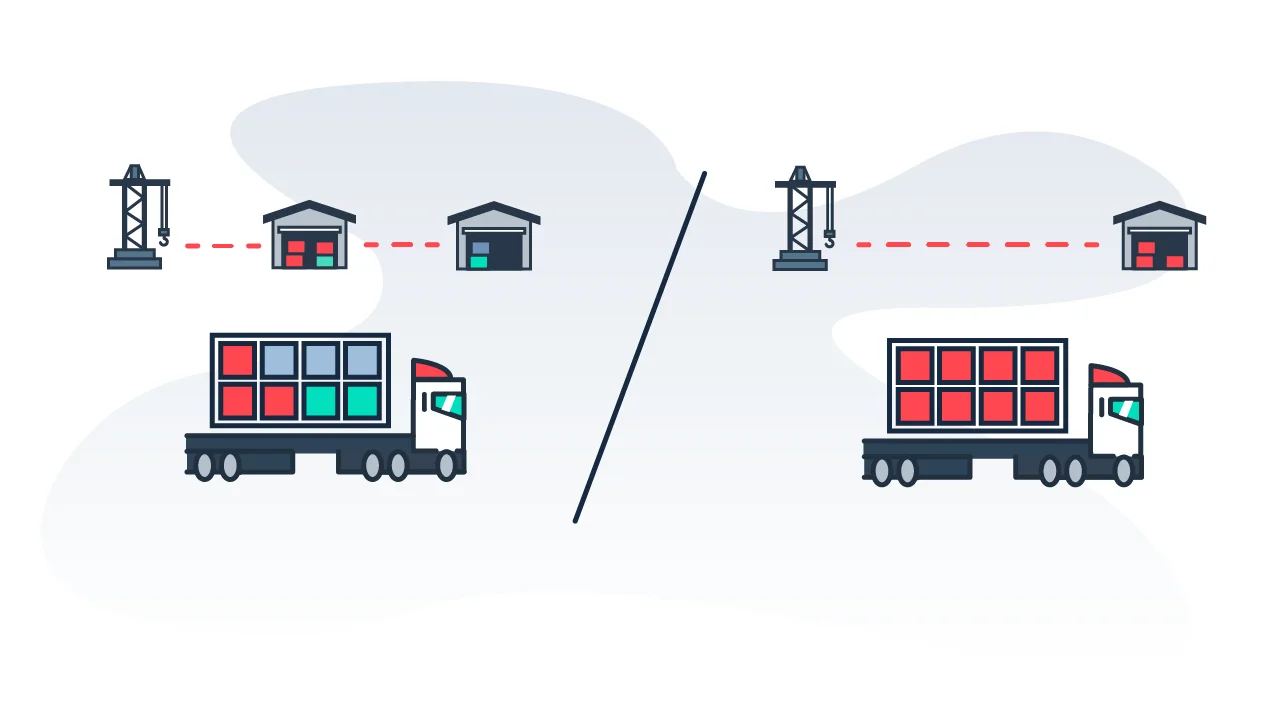
Less than truckload, more commonly known as LTL, is the transportation of shipments that are not large enough to book a full trailer or container. They are instead consolidated with other freight for many customers to fill up a truck. Other common terms used in LTL are cartage and linehaul.
Cartridge is local LTL trucking often to or from an airport or a container freight station.
Linehaul is consolidated LTL freight that is being transported between two cities.
An LTL shipment can touch many trucks in its journey from origin to destination. Often the truck that collects the shipment is different than the one that delivers it.
Long distance intercity LTL shipments are often consolidated and deconsolidated a number of times across both local and linehaul trucks. Sometimes multiple companies can handle a single shipment. This complexity and level of handling often causes more damage losses and delays.
Full truckload, or FTL, is a shipment that can utilize up to 100% of the space in a trailer. For an FTL shipment, the customer is paid for exclusive use of the whole vehicle. Freight is transported from one location to another with no stops in between.
Pickups and deliveries are usually live load and live unload. Meaning that all cargo is loaded or unloaded as soon as the truck arrives at the warehouse distribution center or store.
Within the US, 53 foot dry van trailers are the most common for FTL.
Dry van trailers can hold generally up to 26 non-stackable pallets or 52 stackable pallets. You can haul up to a maximum of 45,000 pounds. Typical FTL commodities include dry food products, apparel, furniture, electronics, anything you see on the shelf of a store.
Let's review a few different types of setups for FTL shipments.
Some FTL shipments use a team truck.
This is when a single truck has two drivers so one can continue to drive while the other is resting. Team trucks are used to expedite transit or to provide extra security for high value loads.
Reefers, or refrigerated trailers, are temperature controlled trailers that keep freight at a specific temperature throughout transit ranging from frozen to room temperature. For example, reefers are commonly used to transport food products and flowers.
Flatbed trailers are utilized when freight doesn't fit standard truck dimensions and cannot be loaded onto a dry van trailer. Common commodities that move via flatbed include farm equipment and construction materials.
When determining whether to ship cargo via FTL or LTL, it is important to keep a few facts in mind. LTL freight will usually be the most cost effective option when only a few pallets need to be shipped, all within standard dimensions, and transit time is not urgent. As mentioned above, LTL shipments touch a few different hubs and may stop multiple times throughout transit.
FTL freight moves from the origin to the destination location with no stops in between. If a shipment is urgent and services more important than cost choosing a dedicated FTL dry van trailer is the best option.
Parcel delivery functions similar to LTL. A single shipment will move on multiple trucks, including both linehaul and final mile cartage. Parcel is often used for residential delivery or when the commodities being shipped are too small for LTL.
Intermodal rail and barge are other modes of transportation that fit within the scope of global trucking. They are services operated by trucking companies as a way to reduce cost and long haul moves. Both have a drage leg at the beginning and end of the move.