[MUSIC PLAYING]
JEET SHAH: Forecasting is the process of making predictions of the future based on historical and current data and analysis of trends. At a high level, there are two approaches to forecasting--
quantitative and qualitative. One of the most frequently used quantitative methods is time series analysis.
In practice for most products, you may have a forecast model that can be broken down into four types of components. First, the level of component, which is the average value in the series. Second is the trend, which is the increasing or decreasing value in the series.
Third is the seasonal component, which shows a variation in the time series that represents intra-year fluctuations that are more or less repeatable year after year. And finally, you have the random or residual component, which represents all the other variations, which are not systematic in nature.
There are two other terms in forecasting that are relevant to note. The forecast horizon and forecast accuracy.
The forecast horizon is the period over which you forecast.
You can set this to be as far out in the future as you like.
However, it is important to note that the accuracy of the forecast typically decreases dramatically the further out you go. In forecast, accuracy is a measure of how close the predicted value is to the actual.
So how can we improve forecasts?
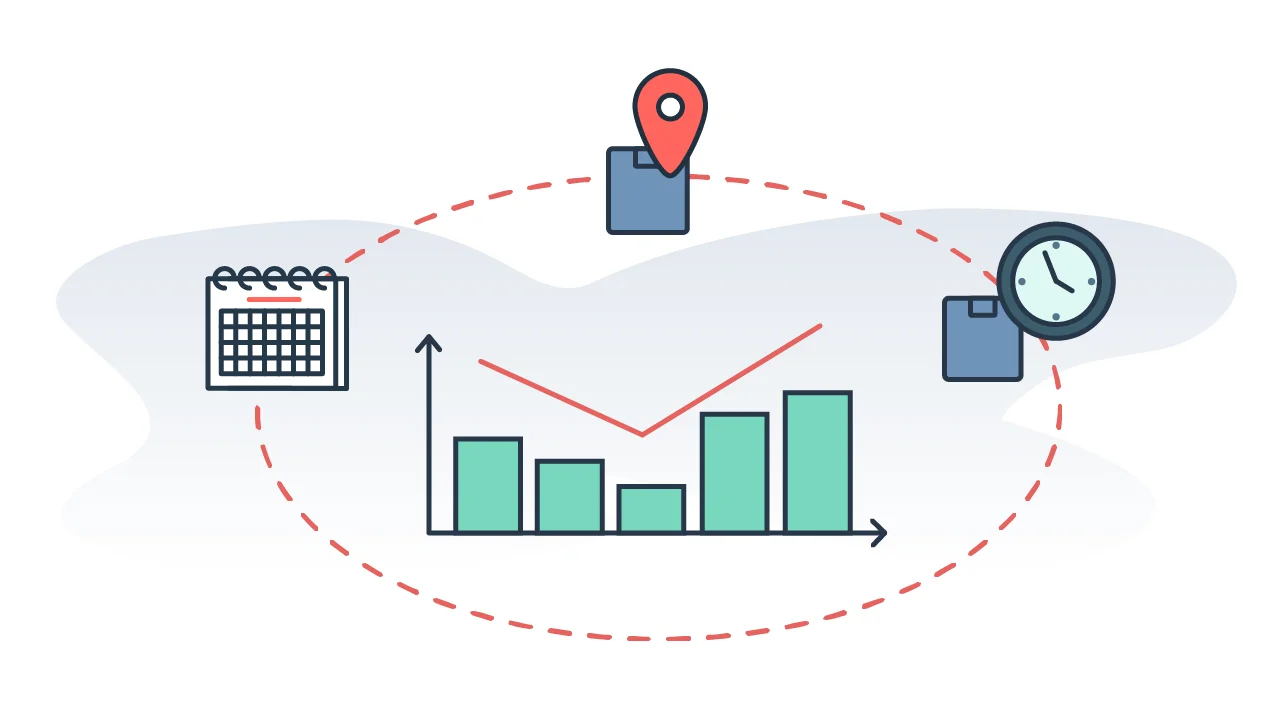
Well, we can aggregate demand by SKUs, by time, and by location.
These types of aggregation help reduce the coefficient of variation, and effectively help improve your forecast.
Another option is to forecast with a shorter time horizon. You should revise your forecast periodically or you can use ranges when you're forecasting out over a long horizon.
So how do we assess the quality of a forecast? Primarily, look at two variables--
accuracy and bias. Accuracy shows how close the forecast is to the actual observation, and bias is the persistent tendency to either over- or under-predict.
Now let's touch briefly on qualitative methods of forecasting. These are typically used when there is little or no historical data to analyze, and relies heavily on intuition or expert judgment. They're relevant when forecasting demand for a completely new product, or when there is a big change expected, like a new government regulation.