Freight Market Update: April 26, 2023
Excess vessel capacity is keeping pressure on ocean rates in the TAWB and LATAM trades through Q2. Air freight capacity out of Asia looks slightly positive in Q2 before tightening in Q3.
Excess vessel capacity is keeping pressure on ocean rates in the TAWB and LATAM trades through Q2. Air freight capacity out of Asia looks slightly positive in Q2 before tightening in Q3.
IMO 2023 compliance is cutting effective ocean capacity, while Shanghai Pudong runway work squeezes air freight to the US and EU through June. Flexport's expert voice covers how sustainable marine biofuels can cut shipping emissions by over 80%.
Blank sailings on Asia-North America lanes hit 64% in Q1, pushing effective ocean deployment to its lowest since before the pandemic. Plus: air capacity tightens out of Shanghai, FEWB rates hold firm, and a breakdown of working capital financing options for importers.
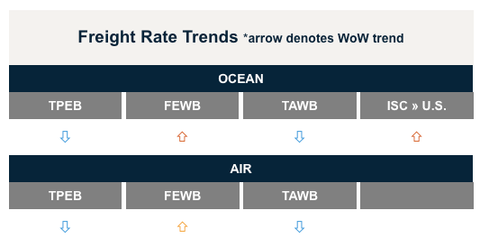
Transpacific capacity stayed oversupplied as carriers added blank sailings, Transatlantic rates fell on weak demand, and imports shifted to the US East Coast.
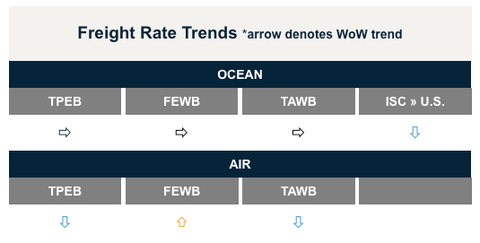
Far East Westbound demand drops on inflation and inventory overages while Asia-Europe and Asia-North America air routes see soft demand and falling rates.

Easing port congestion drives declining Transatlantic and LATAM rates as Asia air capacity returns to pre-COVID levels and US rail ramps move smoothly.
Week of March 14, 2023: carriers try to recover transpacific eastbound rates amid low volumes, with April GRIs in play across a soft market.
Transpacific eastbound ocean rates soften amid low demand and easing congestion, as Flexport shares TPM 2023 insights and previews the 2023 ocean RFP season.