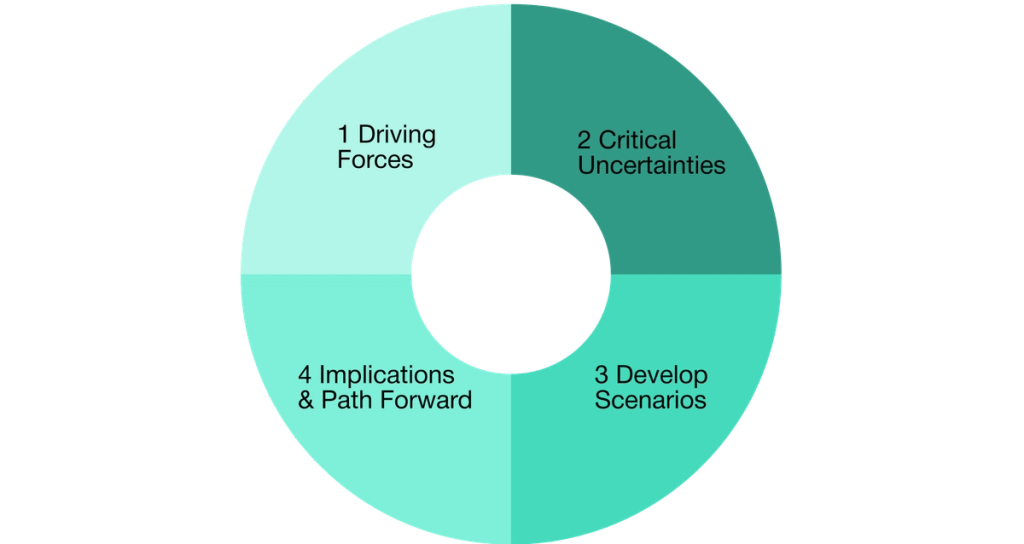
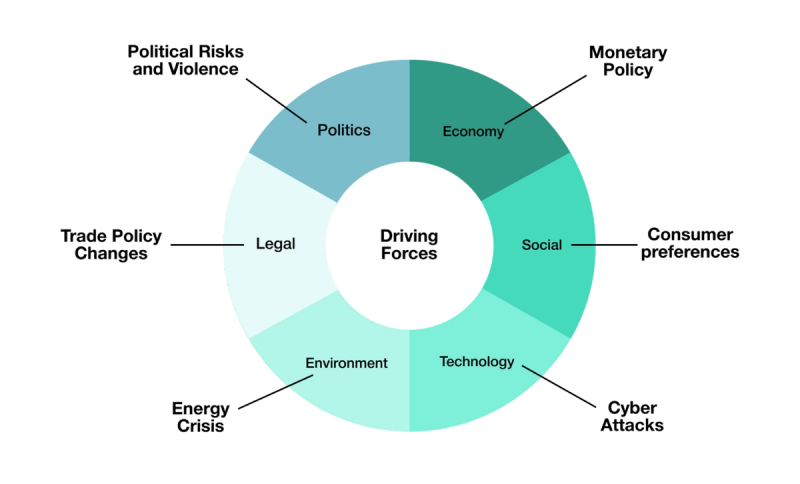
Now that you’ve mapped out the driving forces and critical uncertainties your business faces, you can start modeling possible scenarios specific to your business.
This should consider a wide range of potential scenarios that could unfold based on multiple combinations of uncertainties, not just the most likely disruptions. If you narrow your scope too much, you might miss out on some helpful response ideas.
For each scenario, consider what it would mean for the costs, reliability, and space in your supply chain. Make a list of the events that would need to happen for this scenario to play out, and note what’s unlikely to happen – this helps clearly differentiate scenarios.
With a broad-brush look at potential scenarios, you can calculate how likely each one is, and begin focusing on those most probable. This isn’t about prescribing exact probabilities; it’s more about getting your team’s consensus on what could realistically happen.
Also, some scenarios could even happen together, so your probabilities wouldn’t necessarily add up to 100%.
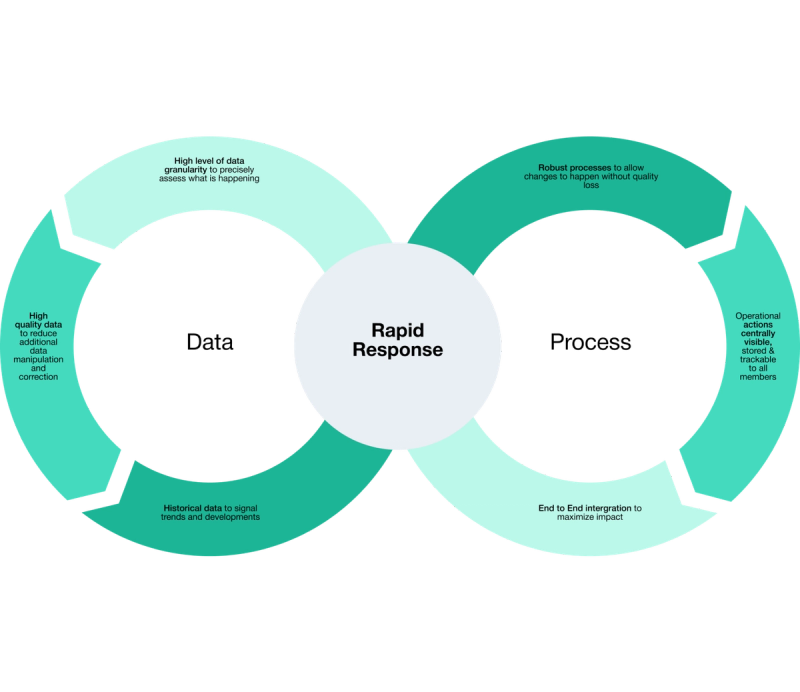
It’s a process that will require accurate and high-quality data – the accuracy of your scenarios will only be as good as the accuracy of your data. But if done correctly, you’ll end up with a robust set of realistic, well-rounded scenarios that’ll help you prepare for whatever comes next.